Asheville’s shortage of affordable housing affects everyone who calls the area home. Addressing the need means bringing together people who can offer different perspectives, including renters, landlords, developers, and service providers. Thrive Asheville helps make those conversations happen.
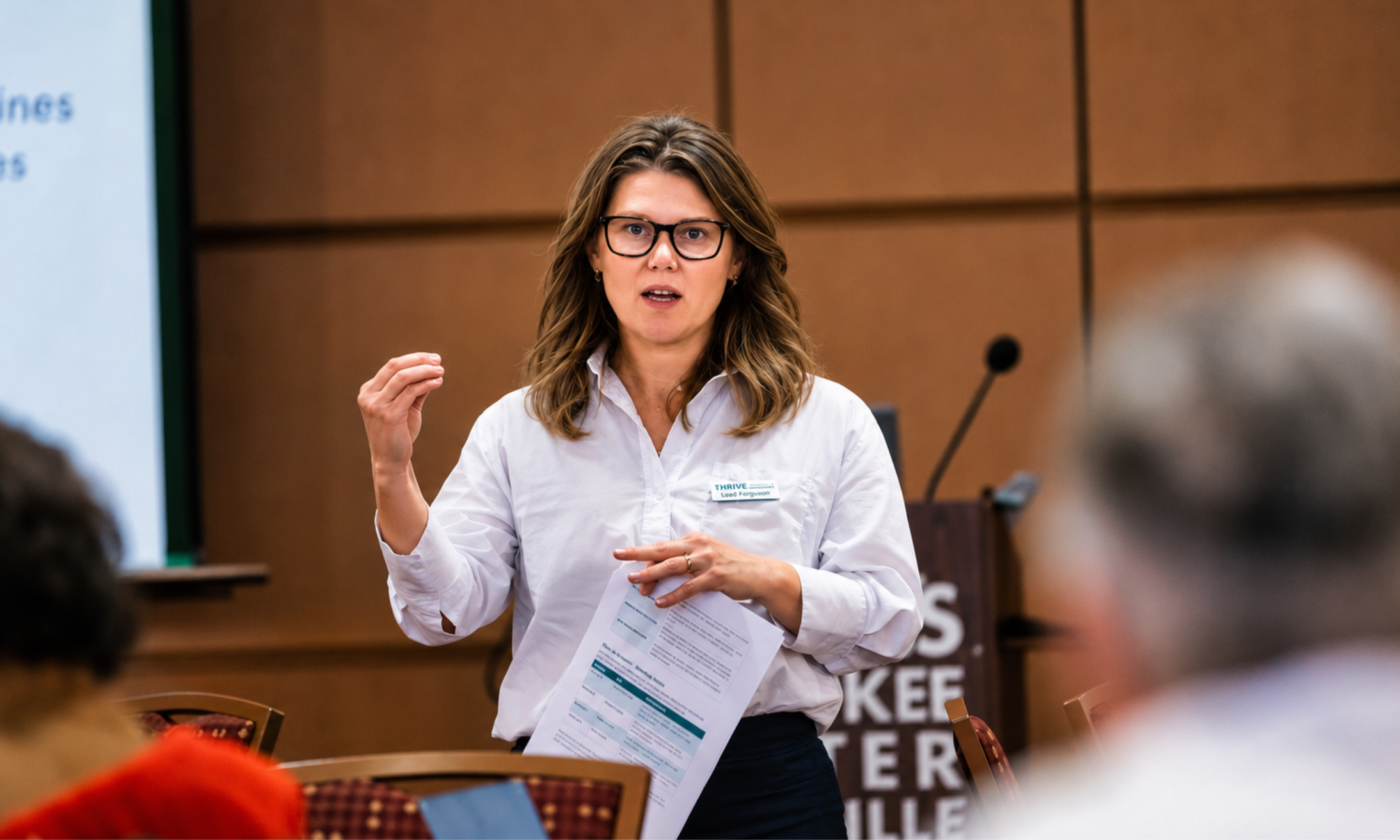
We spoke with Executive Director Dr. Leah Ferguson about the nonprofit organization’s partnership with Helpmate to help domestic violence survivors find stable housing, why residents need a voice in housing decisions, and what gives her hope for a more affordable Asheville.
What’s one thing you wish more people understood about affordable housing?
The one thing I wish more people understood about affordable housing is that it isn’t just a problem for “other people.” The people who can’t afford to live here are the ones who teach our kids, care for our parents, cook our meals, and keep our tourism economy running. When they can’t find a stable home, it affects all of us. And “affordable” doesn’t always mean it’s actually affordable for many people. A unit can be labeled “affordable” and still be out of reach for someone working full-time in a service job. We need to be honest about who we’re building for.
What is Thrive working on right now that can make a real difference, and for whom?
Related to housing and housing stability, Thrive is working on two meaningful projects. We are partnering with Helpmate and area landlords to provide a pathway to stable housing for survivors of domestic violence. We are also working with a collaborative of organizations to support meaningful conversations about how we can work together to address deeply affordable housing needs in and around Asheville. This is long-term work, and there are so many lessons we can learn from folks in and around Asheville, as well as across the state, about how we can support a livable Asheville.
If you could change one thing about how our community tackles housing, what would it be?
I’m lucky to be leading an organization that is positioned to act on addressing how our community tackles housing. The key area we are working on is trying to have conversations across really different perspectives.
Each part of the housing “eco-system” has a different vantage point. If you are a renter, you see things that developers and property managers do not. If you are a landlord, you carry risks and costs that renters may not see. Developers, funders, local government, and service providers each hold a piece of the picture too.
Right now, those conversations often happen in separate rooms. If I could change one thing, I’d get those groups talking with each other instead of about each other, and I’d make sure the people most affected by the housing crisis have a real seat at the table. Solutions are stronger and last longer when they’re built by people who understand the problem from every angle. Right now, Thrive Asheville has a plan to do just that.
Housing headlines can be discouraging. What’s giving you hope right now?
What gives me hope is the people. Since Helene, I’ve watched this community show up for each other in ways I’ll never forget. Neighbors, nonprofits, faith communities, businesses, and local government all stepped up. I see that same spirit in our housing work. Landlords are choosing to partner with us and Helpmate to open doors for survivors of domestic violence. Organizations that could easily work in silos are choosing to sit down together and take on hard questions about deeply affordable housing. None of this is quick or easy, but more people are willing to do the work together than ever before. That tells me a more livable Asheville is possible.